No deposit
Fits: small repeat jobs.
Risk: you carry the paint cost and the no-show.
 For house painters
: answer three questions and get a deposit plan you can put on the quote.
Question 1 of 3
What's the job?
 Free on iPhone · first 3 quotes free
Ask for enough to cover what you must spend before the first coat, mainly paint and supplies, stay inside your state's down-payment limit, and tie every other payment to finished work. That's the logic of the flowchart above. It protects your cash without asking the customer to trust you with money for work you haven't done.
Your customers have been told the same thing from the other side: the FTC advises homeowners not to pay the full amount up front, notes that some states limit contractor down payments, and says never to make the final payment until the work is done (FTC, “Hiring a Contractor”, July 2022).
Updated November 2026
Fits: small repeat jobs.
Risk: you carry the paint cost and the no-show.
Fits: busy seasons, customer-supplied paint.
Risk: covers your calendar, not materials.
Fits: most interiors and exteriors.
Risk: needs a clear cancel policy for tinted paint.
Fits: multi-week or whole-house work.
Risk: more invoices to track.
A deposit the customer can explain to a friend (“that's for the paint”) is a deposit they'll pay without a fight.
There is no single standard, and some states cap home-improvement down payments. A defensible starting point is the money you must spend before the first coat, mostly paint and supplies, plus a small amount to hold the date. Check your state's rule before you print a percentage on a quote.
Generally yes, but limits vary. The FTC tells homeowners that “some states actually limit the amount of money a contractor can ask for as a down payment” (FTC consumer advice, July 2022). Your state contractor board or consumer agency has the number for your state.
Homeowners are told by the FTC not to pay the full amount up front and to hold the final payment until the work is done (FTC). A large deposit with no reason attached reads as a red flag to careful customers. Tie each payment to something they can see: materials bought, rooms finished, final walkthrough.
Often not. If the paint costs less than a missed appointment would, a written booking policy may do more than a deposit. Repeat customers on small jobs are the easiest place to skip it.
Say in the quote what happens to the deposit and to custom-tinted paint if they cancel. Write it before the job, not after. If you signed the contract at their home, they may have a three-business-day right to cancel.
No. ScopeBid adds deposits and payment stages to the quote, records payments you receive by cash, cheque, e-transfer, bank transfer or a card terminal, and tracks the balance. It does not process cards or move money.
General information, not legal or financial advice. Deposit limits and cancellation rights depend on your state and how the contract was signed.
Who should pick something else: crews that need online card payments built into the quote, or office staff who want a shared desktop system. ScopeBid is a one-phone tool for owner-operators.
Three bedrooms and a hallway, four working days, a new customer. You buy the paint and supplies: about $380. The flowchart says: materials deposit, plus one stage because the job runs past three days.
| When | What it's for | Amount |
|---|---|---|
| On acceptance | Paint, primer, tape, plastic | $380 |
| After bedrooms are done | Two days of finished rooms | $1,000 |
| Final walkthrough | Hallway, touch-ups, cleanup | $1,020 |
| Contract total | $2,400 | |
The deposit is 16% of the job, and every dollar of it has a name. Change the paint line and the deposit changes with it.
Deposits and payment stages sit on the quote. When the customer accepts, the quote becomes the job, and the billing card shows contract total, invoiced so far, paid so far and what's left. One design decision we made: internal cost and margin are never printed on the customer's PDF, so you can see your profit while they see a clean schedule.
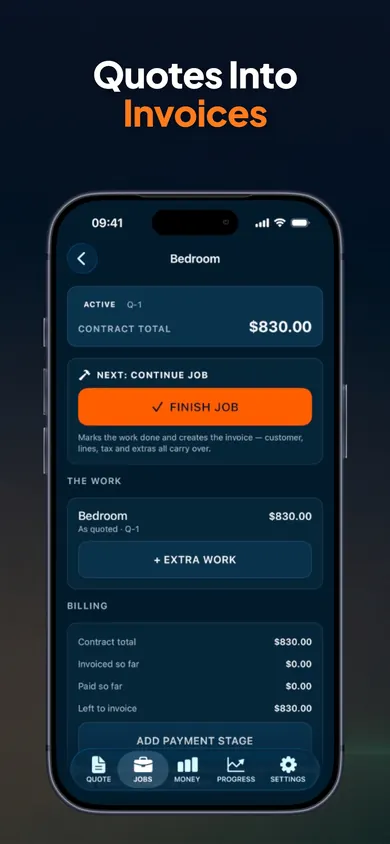
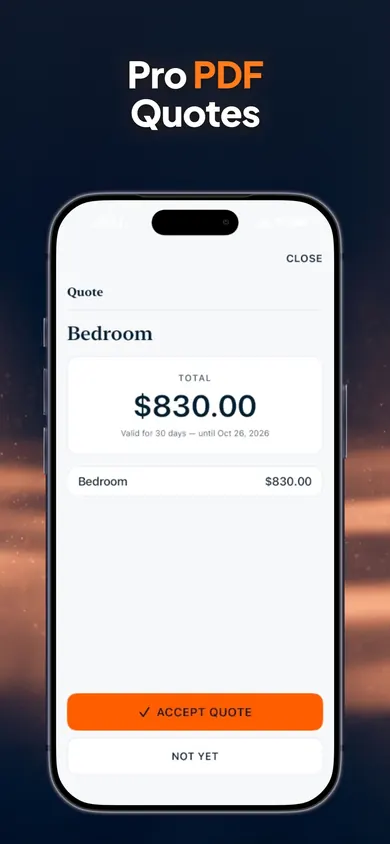
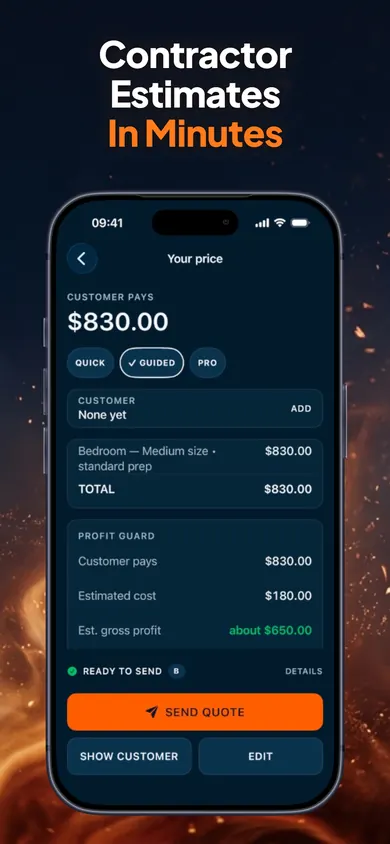
Three questions, one schedule, one PDF. Download free on the App Store and write your first 3 quotes at no cost.