
What is the difference between an estimate, a quote and a bid?
An estimate is an approximate price that can change, a quote is a fixed price for a defined scope (usually with an expiry date), and a bid is a price you submit to compete for a job. The words get used loosely by customers and contractors alike, so what protects you is not the label but the written scope and terms underneath it.
Customers argue about price. Most of the time, they are really arguing about scope.
Who this glossary is not for
If you bid public or commercial work with bonds, prevailing wage and formal bid forms, these definitions are the beginner version and your contract documents decide what each word means. If you need legal wording for your state, ask a local attorney or your licensing board. And if you already price with a full estimating suite and an accountant, ScopeBid will feel small: it is built for owner-operators quoting from a phone.
Estimate vs quote vs bid: quick questions
What is the difference between an estimate, a quote and a bid?
An estimate is an approximate price that may change; a quote is a fixed price for a defined scope, usually with an expiry date; a bid is a price submitted to compete for a job, often against other contractors. People use the words loosely, so the written scope and terms matter more than the label.
Is an estimate legally binding?
It depends on where you work, what you wrote and what the customer signed. Some places have rules about how far a final bill may exceed a written estimate. Write clearly whether a price is an estimate or a fixed quote, and check your local consumer rules; this glossary is not legal advice.
Should a small contractor send estimates or quotes?
Many solo pros send fixed quotes for well-defined jobs (a bedroom, a deck stain, an interior detail) and estimates or time-and-materials for repairs where the problem is hidden. The customer should always be able to tell which one they are holding.
Is markup the same as margin?
No. Markup is profit as a share of cost; margin is profit as a share of price. A 50% markup is a 33.3% gross margin. Mixing them up is one of the most common ways new pros underprice.
How long should a quote be valid?
Long enough for the customer to decide, short enough that material prices do not move under you. Thirty days is common; ScopeBid's sample quote shows "Valid for 30 days". Pick what fits your trade.
What is a change order in plain English?
A short written note that adds work and price to a job you already agreed, approved by the customer before you do it. It turns "while you're here" into paid work.
The glossary, as a chat between two pros
Twelve terms new contractors mix up, each with a one-line example of how it sounds on a real job.
New here. Customer asked for "a quote". Is that different from an estimate?
- Estimate
- Your best guess at the price before every detail is known. It tells the customer roughly what to expect and is usually understood as subject to change."Probably $600 to $800, depending on what's behind the drywall."
- Quote
- A fixed price for a defined piece of work, usually with an expiry date. If the scope stays the same, the price stays the same."Bedroom, two coats, walls and trim: $830, valid for 30 days."
- Bid
- A price submitted to compete for a job, often against other contractors, usually in answer to plans or a request from a property manager, GC or public body."Our bid for the 12-unit hallway repaint is attached."
- Proposal
- A quote with more context: the scope, the approach, the schedule, the terms. Common on bigger jobs where the customer is choosing how, not only how much."Option A, Option B, timeline and warranty on page 2."
- Scope of work
- The written list of what is included and, just as important, what is not. Most price arguments are scope arguments in disguise."Includes patching nail holes. Excludes ceiling and closet interiors."
- Change order
- A written, priced addition or change to a job already agreed. It protects both sides from "while you're here" turning into free work."Extra: replace rotten sill, $140, approved by text 3/12."
- Allowance
- A placeholder amount for something not chosen yet, like fixtures or tile. The final price moves up or down with the real choice."Light fixtures: $300 allowance."
- Deposit
- Money paid before work starts, often to cover materials and hold the date. How much is allowed can depend on local rules, so check yours."30% deposit to book, balance on completion."
- Invoice
- The bill after (or during) the job: what was done and what is owed now. An approved quote usually becomes the invoice."Invoice Q-1: $830, paid $250, balance $580."
- Markup
- How much you add on top of your cost, as a percentage of the cost."Cost $500, price $750: 50% markup."
- Gross margin
- How much of the price is left after direct cost, as a percentage of the price. Same job as the markup example, different number."Price $750, cost $500: 33.3% margin."
- Time and materials (T&M)
- Pricing by the hour plus materials used, instead of a fixed price. Good when the scope is truly unknown; harder for the customer to budget."$65 an hour plus materials at cost plus 15%."
Got it. So: say which one it is, write the scope, and never guess my margin.
Markup vs margin, on one strip
Markup 50%$250 ÷ $500 cost
Margin 33.3%$250 ÷ $750 price
Same job, two true numbers. If you want a 50% margin and you add a 50% markup, you land at 33.3%. ScopeBid's Profit Guard shows estimated gross profit, gross margin and markup side by side, clearly separated, so the two never blur together.
A first-week mini story
An example, not a customer story. A new detailer texts a customer "about $180" for an interior. On the day, the car has pet hair everywhere and the job runs two hours over. The customer points at the $180. Was it an estimate or a quote? Nobody wrote it down, so it was whatever the customer remembers. The next week, the same detailer sends a written quote: interior, standard condition, $180, pet hair removal $40 if needed, valid 30 days. Same price, no argument.
Write the word. Write the scope. Then the price can do its job.
See it in ScopeBid: from quote to invoice
One design decision we made: internal cost and margin are never printed on customer documents. The PDF your customer sees says what they pay and what is included; the profit numbers stay on your screen.
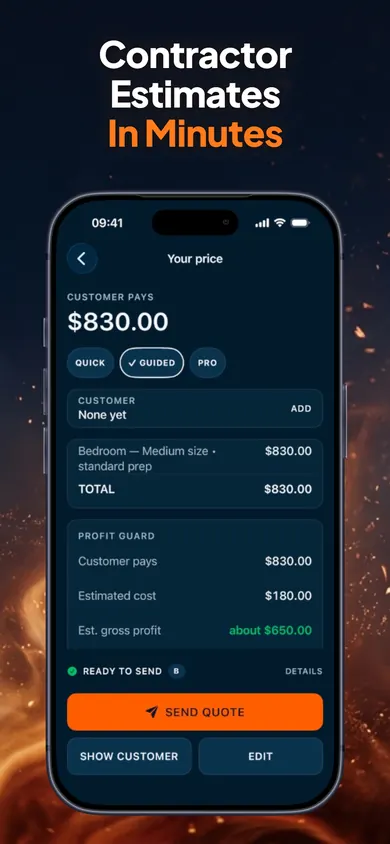
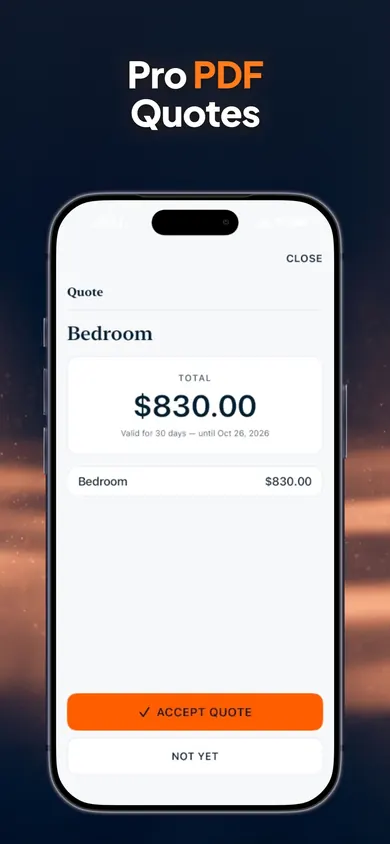
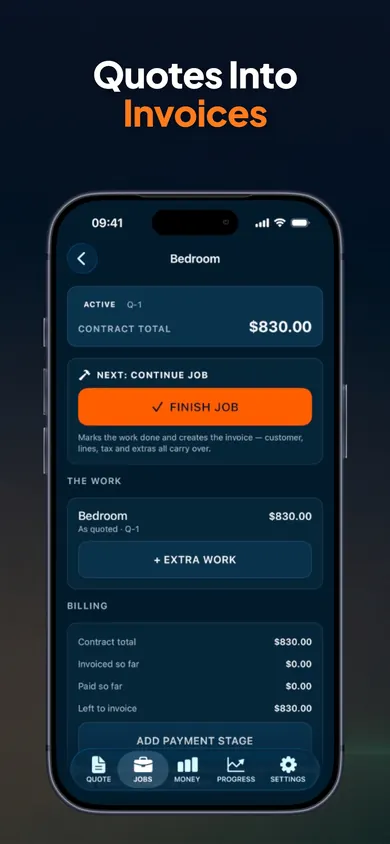
The honest limits: your first 3 quotes are free, with full PDFs, and everything stays viewable and exportable. Unlimited quoting, Business Memory, job costing and invoicing are ScopeBid Pro (monthly or annual). ScopeBid records payments but does not process cards, and it is not accounting or tax software.
Send your first written quote
Pick a job you are pricing this week, write the scope, and send it as a quote with a date on it. Download free on the App Store.

General definitions for small service businesses. Not legal or tax advice.
Related
- ScopeBid: the estimate and invoice app for contractorsQuote jobs from saved pricing, see your margin before you send, share a PDF and turn the approved quote into an invoice. Works offline.
- When a customer says your painting quote is too highA painter's FAQ for the 'too expensive' reply: see what a discount does to your profit in one tap, then answer with scope, not panic.
- Losing money on handyman jobs? Find the leakBusy but broke? Put one real handyman job into our free calculator and see where the money goes: drive time, materials, markup vs margin.
- What to include in a car detailing estimateThe 12 lines every car detailing estimate needs, from vehicle size to condition fees. Free checklist with a score, plus how to send it from iPhone.