 EarnCheck · for two-job weeks
Do you get overtime with two jobs at different employers?
Usually not: under the federal FLSA, two unrelated employers each count only the hours you work for them, so 25 hours at each is no overtime anywhere. Hours are combined when both jobs are for the same employer, or when the employers are related enough to be joint employers.
The overtime rule itself is simple: non-exempt employees get at least time and a half for hours over 40 in a workweek (DOL Fact Sheet #23). The hard part is deciding whose 40 hours. This page is for people with two jobs who want to know which case they are in, and how to keep records that hold up. It is general information from Department of Labor sources, not payroll or legal advice.
Free two-job overtime check
Enter one workweek. We apply the federal 40-hour weekly rule only.
Estimate only. It ignores exemptions, state rules, bonuses and shift premiums, which can change the regular rate. For joint employers the weighted-average rate is our simplification; ask the employer or the Wage and Hour Division how it applies to you.
Who this page and EarnCheck are not for
- Independent contractors and gig drivers. Overtime rules cover employees. If you are paid as a contractor, your situation is different.
- Salaried, exempt staff. If your employer classifies you as exempt, the 40-hour rule may not apply to you.
- Anyone who needs a decision. For a ruling on your own case, contact the DOL Wage and Hour Division or an employment lawyer. EarnCheck never contacts your employer.
How to track two jobs in EarnCheck, in 3 steps
- Set up each job with its own workweek. Pick the U.S. federal 40-hour preset, Ontario's 44-hour rule or your own agreement, and set each employer's real workweek start.
- Confirm shifts as they happen. One tap confirms a finished shift; adjust start, end or unpaid break in seconds. Overnight shifts stay one shift.
- Check each payday line by line. Enter your pay statement and see Match, Difference to Review or Incomplete Information for regular, overtime and premiums.
Free vs Pro for a two-job worker
| Free | EarnCheck Pro | |
|---|---|---|
| Jobs | One | Multiple, kept separate |
| Pay periods | A complete first pay period | Unlimited |
| Overtime rules | Weekly overtime | Adds daily overtime, double time and premiums you define |
| Exports | Saved records stay viewable | Full PDF and CSV exports, backup and restore |
| Price | $0 | EarnCheck Pro Monthly $2.99, or EarnCheck Pro Annual $19.99 with a 7-day free trial for eligible customers |
So the honest answer for two jobs: you need Pro to track both in one app. Two separate jobs with two separate employers is exactly what "kept separate" is for.
Honest limits
- EarnCheck keeps jobs separate. The listing does not describe adding hours across two jobs into one overtime count, so for joint employers or one employer with two roles, use the check above and keep both records.
- It estimates gross pay. It does not calculate taxes or deductions and is not a payroll system.
- The presets cover U.S. federal and Ontario rules plus your own agreement. Other state or provincial rules are up to you to enter (Pro adds daily overtime).
- The design decision we made: deductions are kept apart and never counted as missing pay, so a tax line can't look like an underpayment.
What it looks like
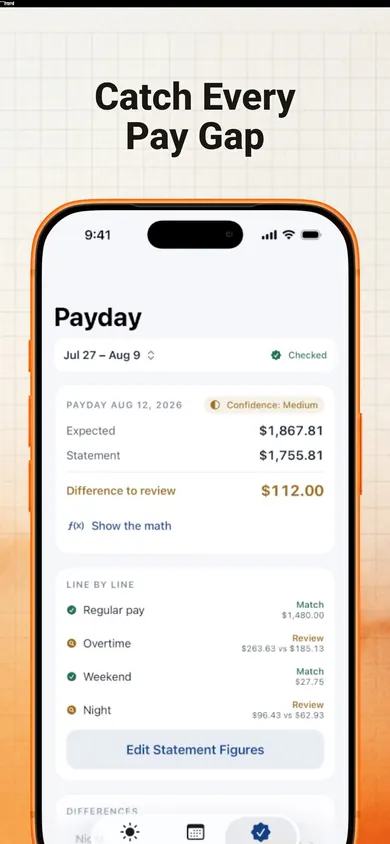
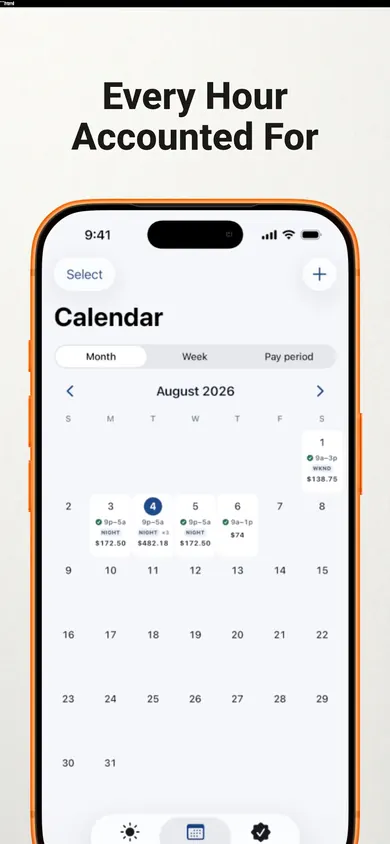
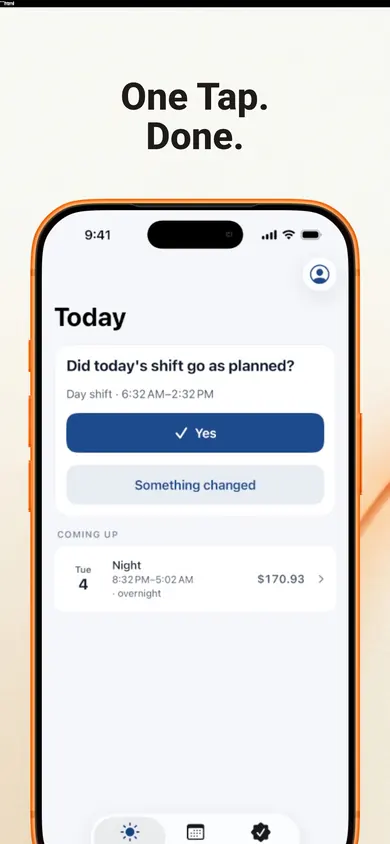
Quotable: overtime follows the employer, not the person, unless the employers are really one.
A two-job week, worked through
Say you work 32 hours at a warehouse at $18 and 16 hours at a restaurant at $15, and the two have nothing to do with each other. That's 48 hours, but no overtime: neither employer passed 40. Your gross is $576 plus $240, $816.
Now change the facts: the second job is 28 hours at a café that shares owners and a manager with the restaurant, which swaps you between the two and keeps your shifts from clashing. Those are the kinds of facts the DOL weighed in FLSA2025-05. If they are joint employers, your 16 plus 28 hours become 44, and 4 hours are owed at time and a half. EarnCheck would show both jobs and their hours side by side, which is the record you'd want before asking payroll.
Two-job overtime questions
If I work two jobs, does my second employer have to pay overtime?
Under the federal FLSA, generally only if you work more than 40 hours for that employer in its workweek, or if the two employers are joint employers. Related businesses that share owners, managers or scheduling can be joint employers; DOL opinion letter FLSA2025-05 (September 30, 2025) is a recent example.
Do hours from two jobs with the same employer combine?
Yes. The FLSA counts all hours worked for one employer in a workweek. If the two roles pay different rates, the regular rate is the weighted average of both, under 29 CFR 778.115.
Can overtime be averaged over two weeks?
No. Each workweek stands alone, and averaging hours over two or more weeks is not allowed, per 29 CFR 778.104.
What counts as a workweek?
A fixed, regularly recurring period of 168 hours, seven straight 24-hour periods, set by the employer. It doesn't have to start on Monday. See DOL Fact Sheet #23.
Does my state have different overtime rules?
Some states add their own rules, such as daily overtime. Where state and federal law differ, check with your state labor department or the DOL Wage and Hour Division.
Will EarnCheck tell me if I'm owed overtime?
No. EarnCheck estimates gross pay from the hours and rules you enter and shows the math. A difference is something to review, not proof of an error, and it is not payroll or legal advice.
Can EarnCheck track two jobs?
Yes, with EarnCheck Pro, which keeps multiple jobs separate. The free version covers one job, a complete first pay period, weekly overtime and a payday comparison.
Keep your own record of both jobs
Hours, rates and paydays for each job, on your phone, with no account.

Download free on the App Store
Updated November 2026 · Not payroll or legal advice.
Related
- EarnCheck: the shift and pay tracker for iPhoneLog shifts, see your estimated gross pay with overtime, then compare it line by line with your pay statement. No account, no bank login.
- Which app to track hours worked and pay? A 3-tap pickerThree taps match your job to an hours-and-pay tracker: the free DOL-Timesheet app, a notebook, or EarnCheck. Honest limits, DOL sources.
- Worked 80+ hours in a pay period and got no overtime?Overtime is counted per workweek, not per two-week pay period. See why 80 hours can still owe overtime, and how to check your pay stub calmly.
- Auto-deducted lunch, but you worked through itYour 30-minute lunch was auto-deducted but you answered call lights through it. Follow a 4-question flowchart built on U.S. Labor Department rules.